
Blog
Commercial Cleaning Tips & Insights
Welcome to the SebClean blog, where we share practical advice, professional cleaning tips and useful guidance for businesses, property managers and anyone responsible for maintaining commercial or shared spaces. From workplace hygiene and cleaning schedules to maintaining communal areas, our articles are designed to make commercial cleaning easier to understand and help you create cleaner, safer and better-presented environments.

How Often Should an Office Be Professionally Cleaned?
Cleaning, Workplace Hygiene, Commercial Cleaning Services
How Often Should an Office Be Professionally Cleaned?
If you are asking how often should an office be professionally cleaned, the honest answer is: it depends on how your workplace is used. As a general guideline, small or low-traffic offices may need professional office cleaning around 2–3 times per week, medium or regularly used offices often benefit from 3–5 cleans per week, and busy, client-facing or high-traffic workplaces in London usually require daily office cleaning. Kitchens, toilets and high-touch shared areas typically need more frequent attention, sometimes several times a day. These are starting points rather than fixed rules — the right office cleaning frequency depends on your office size, employee numbers, foot traffic, facilities, operating hours and the nature of your work.
Quick Guide: How Often Should an Office Be Cleaned?
The table below offers a simple overview of a typical office cleaning schedule. These are general guidelines for UK workplaces and should always be adapted to your building, usage and risk profile.
Workplace / Area | General Cleaning Frequency |
|---|---|
Small, low-traffic office | Professional cleaning 2–3 times per week |
Medium office | 3–5 times per week, depending on usage and visitors |
Busy/high-traffic office | Daily office cleaning, with extra attention to shared areas |
Client-facing workplace (e.g. agencies, consultancies) | Daily or as required to maintain presentation standards |
Shared office / coworking environment | Daily, with frequent checks of toilets and kitchens |
Toilets and washrooms | Daily as a minimum, more often in busy buildings |
Kitchens and break areas | Daily cleaning, with spot cleaning through the day if needed |
Office deep cleaning | Periodically, often quarterly or biannually, depending on risk and usage |
Carpet / hard floor deep cleaning | Periodically, typically every 6–12 months, adjusted for traffic and flooring type |
📌 Key Point: This table is a guide, not a rulebook. A good commercial cleaning company will tailor your office cleaning schedule to your building, people and usage.
Why Office Cleaning Frequency Matters
Office cleaning frequency is one of the quiet drivers of day-to-day performance. A consistently clean space supports good workplace hygiene, reduces the build-up of dust and dirt, and helps people feel more comfortable using shared facilities. Over time, regular professional office cleaning also helps protect your assets, from carpets and hard floors to office furniture and equipment.
In contrast, irregular office maintenance can lead to lingering odours, visible dust on surfaces, and washrooms or kitchens that staff are reluctant to use. While cleaning alone will not eliminate sickness absence, a sensible cleaning regime — particularly in high-touch areas — can support your wider health and safety measures and help you meet your responsibilities as an employer or facilities manager.
There is no one-size-fits-all answer to how often should an office be cleaned, but there are clear patterns based on office size, foot traffic and the type of work carried out. Partnering with an experienced office cleaning provider such as SebClean in London means you can build a schedule that fits your exact needs rather than relying on guesswork or generic packages.
Daily, Weekly and Periodic Office Cleaning: What to Include
Daily / Regular Cleaning Tasks
In most offices, some level of daily office cleaning is recommended, especially in busy London workplaces. High-touch and high-traffic areas collect germs and dirt quickly, and leaving them for days at a time can undermine your hygiene standards. Daily or very regular tasks may include:
Emptying general waste and recycling bins to prevent odours and clutter
Wiping and disinfecting desks, door handles, lift buttons and light switches
Cleaning and restocking toilets and washrooms, including sinks, cubicles and touchpoints
Cleaning kitchens and break areas, including worktops, sinks, cupboard doors and appliances used daily (e.g. microwaves, fridges handles, kettles)
Vacuuming high-traffic areas such as reception, corridors and main walkways
Mopping appropriate hard-floor areas where there is regular footfall or risk of spills
Tidying reception and client-facing spaces so they are ready for visitors
Professional cleaners are trained to move efficiently through these tasks without disrupting your team, often working early in the morning, in the evening or overnight. This regular attention forms the backbone of a reliable office cleaning schedule and keeps your workplace presentable throughout the week.
Weekly Office Cleaning Tasks
Alongside daily routines, most workplaces benefit from weekly office cleaning tasks that go a little deeper or focus on lower-traffic areas. These may include:
Thorough vacuuming of all carpeted areas, including under desks where access allows
Mopping hard floors in areas that do not need daily attention but still accumulate dirt over time
More detailed dusting of surfaces, skirting boards, window ledges and furniture
Cleaning internal glass, such as meeting room doors and internal windows, to remove fingerprints and smears
Wiping and sanitising office chairs, shared tables and other frequently used furniture
Monthly / Periodic Office Deep Cleaning Tasks
Periodic or office deep cleaning helps stop “invisible” dirt from building up and keeps the office feeling fresh rather than just “not dirty”. The exact interval will depend on your building, but monthly, quarterly or biannual tasks may include:
High-level dusting of vents, light fittings, tops of cupboards and other hard-to-reach areas
Deep cleaning of kitchen appliances, including fridges, ovens and dishwashers where present
Descaling taps, shower heads (if applicable) and other washroom fixtures, especially in hard water areas
Periodic carpet cleaning using professional methods to remove embedded dirt and stains
Hard floor deep cleaning, such as machine scrubbing, polishing or sealing, depending on the floor type
A good commercial cleaning company will map these tasks into a clear calendar so you always know what is happening when. This structured approach to office maintenance helps extend the life of flooring, furniture and fixtures, reducing replacement and refurbishment costs over time.
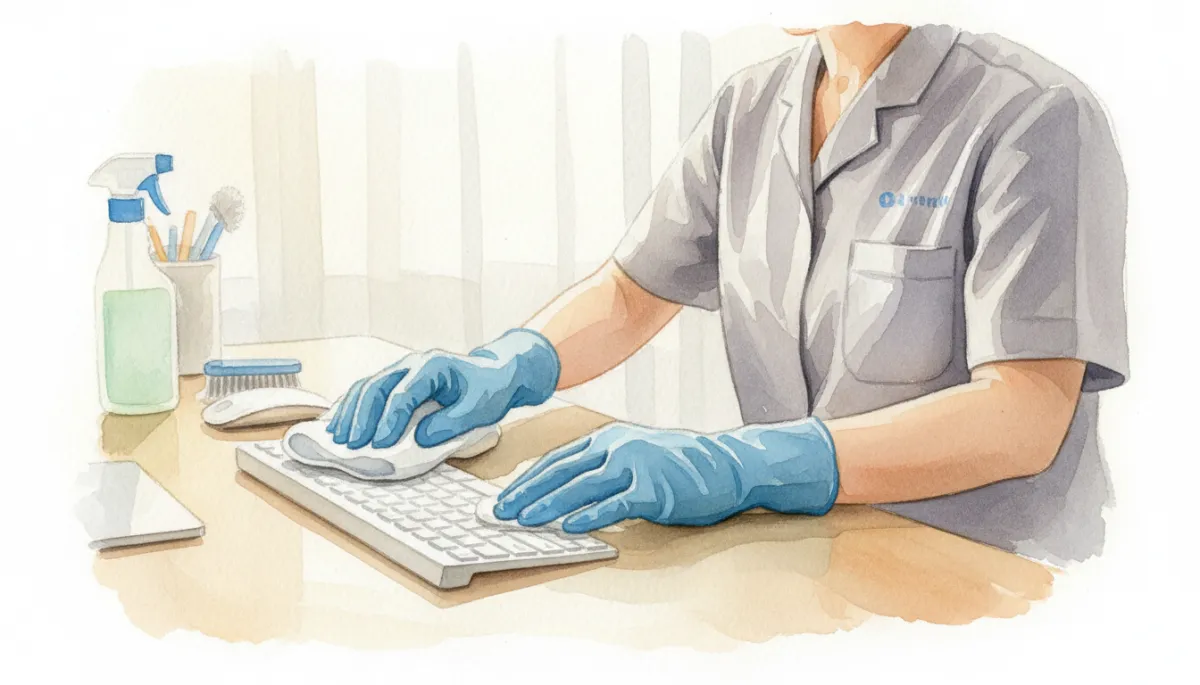
Regular disinfection of high-touch surfaces supports consistent workplace hygiene standards.
Factors That Influence Your Ideal Office Cleaning Schedule
Not every office needs the same level of commercial office cleaning. Two similarly sized floors in London can require very different cleaning schedules depending on how they are used. When deciding how often should an office be cleaned, consider the following practical factors:
Number of employees: More people usually means more mess, faster wear on flooring and greater demand on toilets and kitchens.
Daily foot traffic: Reception areas, corridors and shared spaces in busy offices may require multiple touch-ups per day, while low-traffic rooms can be cleaned less frequently.
Office size and layout: Open-plan offices spread dust and germs quickly, while private offices may concentrate cleaning needs in meeting rooms, shared facilities and circulation routes.
Client and visitor numbers: Client-facing agencies, professional services firms and reception-heavy buildings often need higher presentation standards than a small back-office team with minimal visitors.
Shared facilities: Communal kitchens, toilets, showers, bike stores and changing rooms increase the need for regular cleaning and checks throughout the day.
Type of business: Healthcare, food-related or laboratory environments require stricter hygiene regimes than a typical administrative office. Creative studios or call centres may have different priorities again.
Operating hours: Offices open late, operating in shifts or running seven days a week will usually need more frequent cleaning or staggered visits from your cleaning team.
Flooring type: Carpets, vinyl, stone and hardwood all have different maintenance needs. High-footfall carpet in a central London reception, for example, may need more frequent vacuuming and periodic professional hard floor cleaning or carpet care than a low-use meeting room.
Seasonal requirements: Wet weather, road salt and darker evenings in the UK can all increase the amount of dirt brought into the building, particularly around entrances and lift lobbies.
Talking these details through with your professional office cleaning service allows them to design a tailored schedule instead of a generic package that may over- or under-serve your space. For example, a small London office on a quiet side street may be comfortable with three cleans per week, while a similar-sized office above a busy Tube station might require daily cleaning and more frequent checks of toilets and kitchens.
The Role of Professional Cleaners in Office Maintenance
Professional cleaners do far more than “tidy up”. They bring experience with products, methods and health standards that most teams simply do not have time to master. From choosing the right disinfectant for shared devices to understanding how often carpets or hard floors should be treated, a specialist commercial cleaning company can help you turn office maintenance into a predictable, low-effort routine.
For growing businesses and agencies, outsourcing to a reliable office cleaning London provider also means your internal staff can stay focused on their roles rather than wiping down meeting rooms before every appointment. While cleaning is just one part of running a safe and welcoming workplace, having a trusted cleaning partner in place reduces day-to-day issues and makes it easier to maintain consistent standards across your building.
Building a Simple, Effective Office Cleaning Plan
If you are unsure where to start, it can help to think in three layers: daily hygiene, weekly presentation and periodic protection. Then, work with your chosen provider to turn that into a written office cleaning frequency plan, with clear tasks and time slots. Review it at least twice a year, or whenever your team size, office layout or operating hours change.
📌 Key Takeaway: The “right” cleaning schedule is the one that keeps your office consistently healthy and welcoming, without paying for services you do not need. A tailored plan will look different for a small neighbourhood office than for a busy central London workplace.
In practice, many UK businesses find it helpful to combine daily or regular cleaning of high-use areas with scheduled commercial deep cleaning and specialist cleaning for flooring and hard-to-reach spaces. This layered approach gives you control over standards and budget, while making it clear who is responsible for what and when.
Frequently Asked Questions About Office Cleaning Frequency
Should an office be cleaned every day?
Not every office must be cleaned every day, but many busy or client-facing workplaces in London benefit from daily office cleaning, especially for toilets, kitchens, reception areas and high-traffic floors. Smaller, low-traffic offices may be comfortable with professional cleaning several times per week, supported by basic housekeeping from staff in between visits.
How many times a week should an office be cleaned?
As a general guide, small or low-traffic offices may require professional cleaning 2–3 times per week, medium offices may need 3–5 cleans per week, and high-traffic or client-facing spaces are usually cleaned daily. The right answer for your building depends on occupancy, visitors, facilities and expectations around presentation.
How often should office toilets be cleaned?
Office toilets and washrooms should be cleaned at least once a day in most workplaces, with more frequent checks and top-ups in busy buildings, shared workspaces or multi-tenant sites. In central London offices with heavy footfall, it is common for cleaners to attend washrooms several times a day to maintain standards and restock supplies.
How often should an office kitchen be cleaned?
Office kitchens and break areas are best cleaned daily, with staff encouraged to wipe up spills and load dishwashers between visits. Worktops, sinks, cupboard fronts and appliance touchpoints (such as fridge handles and microwaves) should be sanitised regularly. In larger offices, your cleaning team may also carry out deeper appliance cleaning on a weekly or monthly basis.
How often should office carpets be professionally cleaned?
Most offices benefit from professional carpet cleaning every 6–12 months, depending on traffic levels, the type of carpet and the nature of the business. Entrances, lift lobbies and main walkways in London offices may need more frequent treatment than low-use meeting rooms. Regular vacuuming in your routine clean will help extend the time between deeper carpet cleans.
How often should an office have a deep clean?
An office deep clean is typically carried out quarterly or biannually, although some workplaces schedule deep cleaning annually and supplement it with targeted periodic tasks. Deep cleans are particularly useful before or after office moves, refurbishments, or at seasonal points in the year when you want to reset standards across the building.
Can professional office cleaning be carried out outside working hours?
Yes. Most professional office cleaning services in London, including SebClean, routinely work outside normal office hours — early mornings, evenings, overnight or at weekends. This minimises disruption to your team and allows cleaners to work efficiently across all areas, including meeting rooms and reception spaces that are busy during the day.

Professional Cleaning for Your Commercial Units
Keep entrances, corridors and shared spaces clean and presentable with a cleaning programme designed around your commercial units.

Commercial Cleaning Services You Can Rely On. Professional Commercial Cleaning for Modern Businesses. Commercial Property Cleaning Without the Hassle. Trusted Office & Commercial Cleaning Services. Keeping Commercial Properties Clean Across London.
Quick links
Services
© SebClean Ltd. 2026. All Rights Reserved.